Showing posts with label Iran. Show all posts

Monday, September 24, 2007

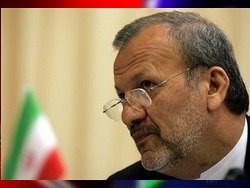
News Flash! Mahmoud Ahmadinejad Does Not Rule Iran

I know this may come as a shock to people who follow major broadcast and print news in the US but it's true. Mahmoud Ahmadinejad, the Iranian President, is not - I repeat, not - the ruler of Iran.

  • He does not set national policy.
  • He does not command Iran's armed forces.
  • He cannot pursue a nuclear weapons program without explicit permission (which he does not have).
  • He cannot order attacks on Israel, the US or anyone else.
  • He is a figurehead analogous to a hood ornament, put there to give the illusion of democratic rule.
Believe it or not it turns out Iran's form of democracy is a bit of a sham and some are quick to point this out whenever they get a chance. So it's a little difficult understand why those same people behave as if they believe that a popularly-elected position in such a sham of a democracy would actually come with any real power. That would seem to be an untenable position to hold, yet some of our most prominent media figures enunciate exactly these conflicting beliefs with a straight face.

The President of Columbia University, where Ahmadinejad spoke today, called him "a petty and cruel dictator". But given the set of powers listed above that he does not have I have to wonder what kind of "dictator" this is.

Well, it turns out that in addition to the office of President, which Ahmadinejad holds, the Iranian government has another official executive position called the "Supreme Leader".

Multiple choice:

Who holds more power in the Iranian Government?

A) The democratically-elected President, currently Mahmoud Ahmadinejad, who is subject to term limits.

B) The rarely-mentioned, unelected Supreme Leader of Iran, Ali Khamanei, who practically serves for life.

C) Satan.

D) None of the above.

Sorry, Christian conservatives, if you chose 'C' you are incorrect (but keep trying, I may ask who calls the shots in the White House later).

The correct answer is actually 'B', the Supreme Leader (the title itself is a bit of a hint). Let that be a lesson to you, test takers. Studies have shown that 'B' is the most frequently correct choice for mulitple-choice questions.

You see, the real power in Iran is wielded by a triumverate consisting of the Supreme Leader, an Assembly of Experts which selects the Supreme Leader and an unelected Council of Guardians, selected by the Supreme Leader by the way, which screens the field of Presidential candidates down to an officially-approved list for a popular election.

This is all well known to our news establishment. Still, on a daily basis we are bombarded with reporting focusing obsessively on the temperment, attitudes, idiosyncrasies and statements of Iran's President to the near exclusion of any coverage of that nation's Supreme Leader.

This is odd in and of itself. But it's particularly odd because it's not as if our learned and serious news givers are unaware of the structure of Iran's government and the existence of a Supreme Leader there. They were certainly aware of Ayatollah Khomeini when he held the position. So what happened in the interim? How and why did the identity of the actual leader of Iran slip down the memory hole?

What's more, I don't recall similar coverage being focused on Ahmadinejad's perfectly tame and reasonable predecessor, President Mohammad Khatami and his platform of reconciliation with the west. I hear tell that Mr. Khatami's electorial defeat at the hand of Ahmadinejad was made possible by the failure of his reconciliation efforts with the needlessly truculent and belligerent George W. Bush, who responded to Khatami's overtures by naming Iran a member of the mythical "Axis of Evil" in what I still view as the single most idiotic speech given in the history of the American Presidency, his 2002 State of the Union Address.

Despite all this, you never heard much about Khatami from our news media. But today it's all Ahmadinejad all the time.

I wonder why that is.

For whatever the reason the coverage we're getting on Iran these days is absolutely ludicrous to point of being completely unreadable.

Yes, Mahmoud Ahmadinejad is a nut. Fine.

He denies the Holocaust. Idiotic.

But he did not, and cannot threaten to "wipe Israel from the map", not only because there is no such idiom for saying such a thing in Farsi but because he has no power to attack a mole-hill, let alone another country.

Mahmoud Ahmadinejad does not run Iran. Lets stop pretending that he does.

Enough already.

UPDATE: As fate would have it, as I was typing this post yesterday this was just published on the pages of the NY Times:

In demonizing Mr. Ahmadinejad, the West has served him well, elevating his status at home and in the region at a time when he is increasingly isolated politically because of his go-it-alone style and ineffective economic policies, according to Iranian politicians, officials and political experts.

Political analysts here say they are surprised at the degree to which the West focuses on their president, saying that it reflects a general misunderstanding of their system.

Unlike in the United States, in Iran the president is not the head of state nor the commander in chief. That status is held by Ayatollah Ali Khamenei, the supreme leader, whose role combines civil and religious authority. At the moment, this president’s power comes from two sources, they say: the unqualified support of the supreme leader, and the international condemnation he manages to generate when he speaks up.

“The United States pays too much attention to Ahmadinejad,” said an Iranian political scientist who spoke on the condition of anonymity for fear of reprisal. “He is not that consequential.”


...unless you want to use him as an excuse to start a war.

.

Read more...

Thursday, March 15, 2007

Recommended Links

Apocalypticism in Action

"We’re conducting military operations inside Iran right now. The evidence is overwhelming. From both the Iranians, Americans, and from Congressional sources."

Col. Sam Gardiner
Army War College
CNN, September 18, 2006

I call attention to my earlier allusions to the Bush Administration's penchant for apocalyptic thinking here, here and here to provide context for what's going on now.

Now, consider how the Bush administration funds it's "Islamo-Fascist" enemies in the "War on Terror" and sponsors terrorism itself in an intentional effort to extend the sectarian bloodbath to the wider region. Tom Englehardt and Seymour Hersh explain..

Let me see if I've got this straight. Perhaps two years ago, an "informal" meeting of "veterans" of the 1980s Iran-Contra scandal -- holding positions in the Bush administration -- was convened by Deputy National Security Advisor Elliott Abrams. Discussed were the "lessons learned" from [the Iran Contra scandal]... In terms of getting around Congress, the Iran-Contra vets concluded, the complex operation had been a success -- and would have worked far better if the CIA and the military had been kept out of the loop and the whole thing had been run out of the Vice President's office.

Subsequently, some of those conspirators... began running a similar operation, aimed at avoiding congressional scrutiny or public accountability of any sort, out of Vice President Cheney's office. They dipped into "black pools of money," possibly stolen from the billions of Iraqi oil dollars that have never been accounted for since the American occupation began. Some of these funds, as well as Saudi ones, were evidently funneled through the embattled, Sunni-dominated Lebanese government of Prime Minister Fouad Siniora to the sort of Sunni jihadi groups ("some sympathetic to al-Qaeda") whose members might normally fear ending up in Guantanamo and to a group, or groups, associated with the fundamentalist Muslim Brotherhood...

[Snip]

In "The Coming Wars" in January of 2005, [Hersh] first reported that the Bush administration, like the Israelis, had been "conducting secret reconnaissance missions inside Iran at least since" the summer of 2004... He also reported that American combat units were "on the ground" in Iran, marking targets for any future air attack, and quoted an unnamed source as claiming that they were also "working with minority groups in Iran, including the Azeris, in the north, the Baluchis, in the southeast, and the Kurds, in the northeast. The troops ‘are studying the terrain, and giving away walking-around money to ethnic tribes, and recruiting scouts from local tribes and shepherds,' the consultant said. One goal is to get ‘eyes on the ground'… The broader aim, the consultant said, is to ‘encourage ethnic tensions' and undermine the regime"...

The Seymour Hersh Mystery: A Journalist Writing Bloody Murder… And No One Notices
By Tom Engelhardt
Tom Dispatch


In the past few months, as the situation in Iraq has deteriorated, the Bush Administration, in both its public diplomacy and its covert operations, has significantly shifted its Middle East strategy. The “redirection,” as some inside the White House have called the new strategy, has brought the United States closer to an open confrontation with Iran and, in parts of the region, propelled it into a widening sectarian conflict between Shiite and Sunni Muslims.

To undermine Iran, which is predominantly Shiite, the Bush Administration has decided, in effect, to reconfigure its priorities in the Middle East. In Lebanon, the Administration has coƶperated with Saudi Arabia’s government, which is Sunni, in clandestine operations that are intended to weaken Hezbollah, the Shiite organization that is backed by Iran. The U.S. has also taken part in clandestine operations aimed at Iran and its ally Syria. A by-product of these activities has been the bolstering of Sunni extremist groups that espouse a militant vision of Islam and are hostile to America and sympathetic to Al Qaeda...

The Redirection: A Strategic Shift
By Seymour Hersh
The New Yorker

Add to this list my own post from September of last year...
Early last year Seymour Hersh of the The New Yorker wrote this piece outlining what his sources told him was a plan by the Bush administration to put special forces inside Iran -- to perform search & destroy missions, target identification and foment unrest -- in preparation for an attack on that country. At the time the article was published his assertions were ridiculed as "far-fetched" and "riddled with errors" by the Bush administration. Not much has been spoken of this since that time.

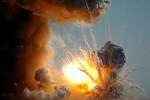
But then a strange thing happened, something I noticed shortly after seeing that article and in the months before I started this blog. Stuff in Iran started blowing up. Each time the explosions were dismissed as something innocuous but, yet and still, stuff kept blowing up. I got curious so decided to continue to check up on it from time to time and, amazingly, these explosions kept happening. I'm talking about an unusually high number of freak explosions for one country that size without any kind of war (that we know of) going on. It was in the process of this little project that I first thought, "I should start a blog".

As I tracked these explosions and listened to the Bush Administration's simultaneous pronouncements that any talk of attacking Iran in the short term was ridiculous (but not off the table) I couldn't help but think about how, if Hersh was correct, this would all mirror the M.O. used in Iraq. So it all fits together, you know? Mind you, this was nothing one could present as a "smoking gun" for predicting future events or anything but it was interesting nevertheless.

Finally, explosions in Iran compiled from this collection:

Explosion in Iran sets off fears
USA Today
February 16, 2005

Explosion in Tehran Kills 1
Iran Focus
June 12, 2005

Deadly blasts hit two Iranian cities
Al Jazeera English
June 14, 2005

Explosion Hits Office in Southwest Iran
ABC News International
May 8, 2006

Bomb Kills 11 on Military Bus in Iran
CNN
February 14, 2007

Order restored after blast at girls school in Iran
CNN
February 17, 2007


"Birth pangs of a new Middle-East"...

Read more...

Thursday, March 01, 2007

Don't Think of Nuclear War!


This is the kind of post The Fear of All Sums was really created to cover, people playing mind games with words and figures like this.

In an essay entitled, The Words None Dare Say: Nuclear War, George Lakoff, Professor of Linguistics at UC Berkley, breaks down the way Strongman George Bush's insane plans are being soft-pedaled in the media...

The elimination of Natanz would be a major setback for Iran's nuclear ambitions, but the conventional weapons in the American arsenal could not insure the destruction of facilities under seventy-five feet of earth and rock, especially if they are reinforced with concrete."
Seymour Hersh, The New Yorker, April 17, 2006

"The second concern is that if an underground laboratory is deeply buried, that can also confound conventional weapons. But the depth of the Natanz facility - reports place the ceiling roughly 30 feet underground - is not prohibitive. The American GBU-28 weapon - the so-called bunker buster - can pierce about 23 feet of concrete and 100 feet of soil. Unless the cover over the Natanz lab is almost entirely rock, bunker busters should be able to reach it. That said, some chance remains that a single strike would fail."
Michael Levi, New York Times, April 18, 2006


A familiar means of denying a reality is to refuse to use the words that describe that reality. A common form of propaganda is to keep reality from being described.

In such circumstances, silence and euphemism are forms of complicity both in propaganda and in the denial of reality. And the media, as well as the major presidential candidates, are now complicit.

The stories in the major media suggest that an attack against Iran is a real possibility and that the Natanz nuclear development site is the number one target. As the above quotes from two of our best sources note, military experts say that conventional "bunker-busters" like the GBU-28 might be able to destroy the Natanz facility, especially with repeated bombings. But on the other hand, they also say such iterated use of conventional weapons might not work, e.g., if the rock and earth above the facility becomes liquefied. On that supposition, a "low yield" "tactical" nuclear weapon, say, the B61-11, might be needed.

If the Bush administration, for example, were to insist on a sure "success," then the "attack" would constitute nuclear war. The words in boldface are nuclear war, that's right, nuclear war — a first strike nuclear war.

We don't know what exactly is being planned — conventional GBU-28's or nuclear B61-11's. And that is the point. Discussion needs to be open. Nuclear war is not a minor matter...

[Snip]

Bush, Cheney, McCain, Edwards, Clinton, and Obama all say indirectly that they seriously consider starting a preventive nuclear war, but will not engage in a public discussion of what that would mean. That contributes to a general denial, and the press is going along with it by a corresponding refusal to use the words.

If the consequences of nuclear war are not discussed openly, the war may happen without an appreciation of the consequences and without the public having a chance to stop it. Our job is to open that discussion.

Of course, there is a rationale for the euphemism: To scare our adversaries by making them think that we are crazy enough to do what we hint at, while not raising a public outcry. That is what happened in the lead up to the Iraq War, and the disaster of that war tells us why we must have such a discussion about Iran. Presidential candidates go along, not wanting to be thought of as interfering in on-going indirect diplomacy. That may be the conventional wisdom for candidates, but an informed, concerned public must say what candidates are advised not to say.

I highly recommend the full article.

In the past I've linked to at least one of those articles cited at the top of the excerpt and my point in doing so bears repeating. Starting a first-strike nuclear attack with so-called "low yield" nuclear weapons (an absurd contradiction in terms) is not beyond the audacity nor stupidity of our current leadership in Washington. It would be a mistake for us to put such a thing past them. Before dismissing such speculation as alarmist consider this previous post and some of the GOP's past rhetoric on this very subject. Yes, they're thinking (thought) about this and may very well have already decided to do it.

You know, there was a time when a nuclear war was considered a "big deal".

Read more...

Saturday, February 17, 2007

Decoding White House War Spin


I've been tossing this thing around in my head for some time now, trying to figure a way to summarize all the propaganda surrounding Dear Leader's glorious march to another war in a single post. I've not been successful thus far, such a mess it is. Then along comes The Daily Show to once again show us how it's done:


...and here:


Once again, unfortunately, these clips come with an expiration date. To view these after March 15th follow this link to Crooks & Liars.

See also two recent articles by Rosa Brooks' on the subject:

Insurgents: They Buy American

The Dubya Vinci Code

Read more...

Thursday, February 15, 2007

Posting Delayed by Category 5 Propaganda Hurricane


Every time I think I'm ready to post something comprehensive about the selling of our next big war-for-no-reason-at-all I find myself knocked down and overwhelmed by another gust of hot air. We are being inundated at this time by a barrage of amazingly transparent propaganda accompanied by almost no common-sense analysis.

It is truly breathtaking to watch the machine at work, I must admit and I will be commenting on this warmongering nonsense soon. I've simply been taken aback by the sheer scale of the propaganda at the moment. I find it deeply disturbing.

Read more...

Monday, February 12, 2007

A Brief Reminder About the Libby Trial and the Coming Attack on Iran


Before this gets completely lost in the shuffle of our inexorable drive towards another war, I thought I should at least make a passing reference to this well-documented but little discussed fact. The very people who are now telling us that the supposed nuclear weapons threat posed by Iran is the most important thing in the world right now are the same people who saw fit to blow the cover of a CIA operative, Valerie Plame, who's main area of concentration was on, guess what, WMD proliferation issues in Iran.

According to current and former intelligence officials, Plame Wilson, who worked on the clandestine side of the CIA in the Directorate of Operations as a non-official cover (NOC) officer, was part of an operation tracking distribution and acquisition of weapons of mass destruction technology to and from Iran.

Speaking under strict confidentiality, intelligence officials revealed heretofore unreported elements of Plame's work. Their accounts suggest that Plame's outing was more serious than has previously been reported and carries
grave implications for U.S. national security and its ability to monitor Iran's burgeoning nuclear program.

The Libby trial has revealed, in detail that would be shocking if we hadn't already been numbed beyond the capacity to feel shock by this administration, that there was a concerted effort to blow this agent's cover for purely political purposes (as opposed to some frivolous purpose like protecting the nation or something).

So how do we reconcile this? On the one hand we have a White House that tells us that Iran's nuclear program poses the gravest of threats to the safety of the US and the world. On the other hand, they seem to have felt perfectly at ease tossing out the window a CIA operation to counter Iran's efforts, outing not just Ms. Plame, but her entire under-cover operation, endangering the lives of any agents or cooperating individuals known to be associated with her and spoiling those assets for any future operations that may start up.

So, it seems Iran's programs are important enough to start a war over today, but they're not so important that we'd want to protect federal agents working to track them or anything. No, we can feel free to sacrifice them to BushCo's political calculus.

I find that so interesting. Maybe folks should talk about that more.


Digg!

Read more...

Sunday, February 11, 2007

"Surging" Into a Self-Sustaining Loop


Whenever I read Chris Floyd's Empire Burlesque I get a strange feeling of deja vu, as if I'm reading my own thoughts penned by a better writer. Writing about the latest Milleresque propaganda -- crying out for Iranian blood -- splashed across the pages of the New York Times, Floyd touches on a point about the "surge" that I've been stuck on for some time. Floyd writes:

But what's most notable about the unsourced story is the way it -- and the White House -- are now trying to conflate the Iranians with the Iraqi insurgency, in much the same fashion as they merged Saddam Hussein and al Qaeda in the public mind. Here, the trick is to focus on Iran's alleged supply of IEDs to Iraq's Shiite militias, talking of their deadly effectiveness against American soldiers -- while scarcely noting the fact that the overwhelming number of attacks against the "Coalition of Aggression" come from the Sunni insurgents. What then are the headlines, the soundbites for the public? Iran... IEDs... deadly... insurgency... kill Americans." The intended effect, of course, is to convey the impression that Iran is driving the Iraqi insurgency that is now killing Americans in record numbers.

But the story is also significant for what it doesn't spell out, but clearly implies. Assuming for a moment the highly unlikely possibility that the Bushist security organs are actually telling the truth or even something like it in this instance -- given their repeatedly demonstrated propensity to lie and lie and lie again when the Bossman wants a war -- we are left with an extraordinary claim by the Bush Administration: that their own allies have turned against them and are now killing American soldiers with sophisticated weapons.

For who are the "Shiite militias"? They are the armed wings of the political factions that now run the Bush-backed Iraqi government, elected in an electoral process designed by the Bush Administration that guaranteed the rise of these extremist sectarian armed cliques to power. The Shiite militias ARE the Iraqi government -- or at least, they are part of that government's many contentious factions. If they have power, if they operate with impunity -- with or without weapons supplied by the long-time allies in Iran, with which most of the Iraqi Shiite factions have a relationship going back decades -- then it is because these factions have been and are now being empowered, armed, funded, trained and supported by the Bush Administration.

This is what the Bushists are tacitly admitting when they claim that the Shiite militias are fragging their ostensible American allies with Iranian weapons. They are saying that even the factions "liberated" and empowered by the American invasion are now attacking and killing U.S. soldiers, with even more virulence than the Sunni insurgents. They are saying that Bush is now "surging" more soldiers into a situation where every single armed faction in the Iraqi conflict is targeting and killing Americans, including those factions armed and funded by the Americans themselves.

This is a remarkable confession. And it represents yet another of the many overwhelming reasons to bring Bush's bloody Babylonian escapade to a halt without further delay. The most compelling reason, of course, is the fact that the invasion was a war crime from the word go and every second that it continues is a furtherance and compounding of that original sin. But even by the viscera-smeared lights of the war's own proponents, to have reached the place where the very people you have empowered are killing your troops is surely the end of the road.

What's wrong with this picture?

Read more...

Friday, February 09, 2007

Iraq Redux


The 'W' is for 'War'!Gary Unger, author of House of Bush, House of Saud upon which much of Michael Moore's Fahrenheit 9/11 was based, has written an extensive essay for Vanity Fair dealing with the parallels between the propaganda leading to the invasion of Iraq and what we're hearing today about Iran. I don't have much to add because Unger lays it all out so plainly. I'll let this extended excerpt speak for itself. All emphases, of course, are mine...

From the Wonderful Folks Who Brought You Iraq

The same neocon ideologues behind the Iraq war have been using the same tactics—alliances with shady exiles, dubious intelligence on W.M.D.—to push for the bombing of Iran. As President Bush ups the pressure on Tehran, is he planning to double his Middle East bet?

by Craig Unger March 2007

In the weeks leading up to George W. Bush's January 10 speech on the war in Iraq, there was a brief but heady moment when it seemed that the president might finally accept the failure of his Middle East policy and try something new. Rising anti-war sentiment had swept congressional Republicans out of power. Secretary of Defense Donald Rumsfeld had been tossed overboard. And the Iraq Study Group (I.S.G.), chaired by former secretary of state James Baker and former congressman Lee Hamilton, had put together a bipartisan report that offered a face-saving strategy to exit Iraq. Who better than Baker, the Bush family's longtime friend and consigliere, to talk some sense into the president?

By the time the president finished his speech from the White House library, however, all those hopes had vanished. It wasn't just that Bush was doubling down on an extravagantly costly bet by sending 21,500 more American troops to Iraq; there were also indications that he was upping the ante by an order of magnitude. The most conspicuous clue was a four-letter word that Bush uttered six times in the course of his speech: Iran.

In a clear reference to the Islamic Republic and its sometime ally Syria, Bush vowed to "seek out and destroy the networks providing advanced weaponry and training to our enemies." At about the same time his speech was taking place, U.S. troops stormed an Iranian liaison office in Erbil, a Kurdish-controlled city in northern Iraq, and arrested and detained five Iranians working there.

Already, hundreds of billions of dollars have been spent on the war in Iraq. Tens, perhaps hundreds, of thousands of people have been killed. Countless more are wounded or living as refugees. Launched with the intention of shoring up Israeli security and replacing rogue regimes in the Middle East with friendly, pro-Western allies, the war in Iraq has instead turned that country into a terrorist training ground. By eliminating Saddam Hussein, the U.S.-led coalition has sparked a Sunni-Shiite civil war, which threatens to spread throughout the entire Middle East. And, far from creating a secular democracy, the war has empowered Shiite fundamentalists aligned with Iran. The most powerful of these, Muqtada al-Sadr, commands both an anti-American sectarian militia and the largest voting bloc in the Iraqi parliament.

"Everything the advocates of war said would happen hasn't happened," says the president of Americans for Tax Reform, Grover Norquist, an influential conservative who backed the Iraq invasion. "And all the things the critics said would happen have happened. [The president's neoconservative advisers] are effectively saying, 'Invade Iran. Then everyone will see how smart we are.' But after you've lost x number of times at the roulette wheel, do you double-down?"

By now, the story of how neoconservatives hijacked American foreign policy is a familiar one. With Vice President Dick Cheney and Rumsfeld leading the way, neocons working out of the office of the vice president and the Department of Defense orchestrated a spectacular disinformation operation, asserting that Saddam Hussein's weapons of mass destruction posed a grave and immediate threat to the U.S. Veteran analysts who disagreed were circumvented. Dubious information from known fabricators was hyped. Forged documents showing phony yellowcake-uranium sales to Iraq were promoted.

What's less understood is that the same tactics have been in play with Iran. Once again, neocon ideologues have been flogging questionable intelligence about W.M.D. Once again, dubious Middle East exile groups are making the rounds in Washington—this time urging regime change in Syria and Iran. Once again, heroic new exile leaders are promising freedom.

Meanwhile, a series of recent moves by the military have lent credence to widespread reports that the U.S. is secretly preparing for a massive air attack against Iran. (No one is suggesting a ground invasion.) First came the deployment order of U.S. Navy ships to the Persian Gulf. Then came high-level personnel shifts signaling a new focus on naval and air operations rather than the ground combat that predominates in Iraq. In his January 10 speech, Bush announced that he was sending Patriot missiles to the Middle East to defend U.S. allies—presumably from Iran. And he pointedly asserted that Iran was "providing material support for attacks on American troops," a charge that could easily evolve into a casus belli.

"It is absolutely parallel," says Philip Giraldi, a former C.I.A. counterterrorism specialist. "They're using the same dance steps—demonize the bad guys, the pretext of diplomacy, keep out of negotiations, use proxies.
It is Iraq redux..."
This is but a sample. I strongly recommend reading the article in its entirety. At the risk of seeming redundant...


Read more...

Tuesday, January 23, 2007

Straight to the Good Part


I think this AP story serves as a good follow-up to the "The" vs "A" post from a few days ago. That earlier post dealt with the use of language to control the terms of a debate, focusing on the use of indefinite article "the" to reinforce false assumptions (e.g., "What are we to do about the WMD in Iraq"). The following excerpt is an example of same technique applied this time by the use of the adjective "its"...

U.S. Warns Iran to Back Down

By Jim Krane, Associated Press Writer | January 23, 2007

DUBAI, United Arab Emirates --A second U.S. aircraft carrier strike group now steaming toward the Middle East is Washington's way of
warning Iran to back down in its attempts to dominate the region, a top U.S. diplomat said here Tuesday.

Nicholas Burns, U.S. undersecretary of state for political affairs, ruled out direct negotiations with Iran and said a rapprochement between Washington and Tehran was "not possible" until Iran halts uranium enrichment.

"The Middle East isn't a region to be dominated by Iran. The Gulf isn't a body of water to be controlled by Iran. That's why we've seen the United States station two carrier battle groups in the region," Burns said in an address to the Dubai-based Gulf Research Center, an influential think-tank...

So what has happened here? It seems that we have completely skipped over the most important part of the debate, the part where we actually establish as a fact the idea that Iran is attempting to dominate the region or that it's nuclear program is for anything other than energy production. We haven't bothered with that at all. Instead we've gone straight to the good part, the fun part, the part where we decide what to do about this unconfirmed threat.

This is how simple, subtle choices of words can change the entire dynamic of the debate. The US official quoted here could have warned Iran to not attempt to dominate the region. He could have made reference to Iran's suspected desire to dominate the region. He could have used any number formulations that more accurately portrayed state of knowledge on Iran's intentions, characterizing them as uncertain or unclear. But, alas, that doesn't the serve the purpose of justifying the war that's already been decided upon. So he chose not to use any of those. Instead he baselessly gave us a definitive reference to "it's attempts" to dominate the region as if they were already documented and agreed upon.

That possessive adjective, "it's", carries with it the implicit assumption that thing that is possessed actually exists. How can it be possessed if it doesn't exist, right? Good, no need to prove it then.

Naturally, it follows that the only question that remains now is what to do about "it's attempts" and it follows very nicely from there that we have our warships in place.

So, as you can see, if we accept this spokesman's framing of the issue we have unwittingly conceded the point completely. The decision to take some action against Iran has already been made for us before a single countering argument can even been made because the issue has come to us pre-packaged with a ready-made concession to the warmongers. If we accept it as-is then, just as was with Iraq, they may fire when ready.

"Can't get fooled again!"

Read more...

Wednesday, January 17, 2007

"The" vs "A"


This is my kind of article. A psychology professor breaks down one glaring example of the use of language to control the terms of the debate. In this case he looks at the impact of the indefinite article:

American psychologist, Elizabeth Loftus, and her colleagues have shown how rhetorical tricks can make people misconceive reality. In one study by Loftus and Zanni (1975), people were shown a film of a car accident, and then asked questions about what they saw. A random half of the witnesses were asked “Did you see a broken headlight?” and the other half were asked “Did you see the broken headlight?” In the first version, 7% of the people said they saw a broken headlight. In the second version, 17% said they saw the broken headlight. In fact, there was no broken headlight. If someone uses the definite article the, then listeners and readers tend to presume that what follows actually exists.

In another study by Loftus (1975), people viewed a film and one group answered a questionnaire that included,
"Did you see the children getting on the school bus?" and the other group did not get this question. A week later, people filled out a second questionnaire that contained the question, "Did you see a school bus?" Only 6% of the people who had not been exposed the the question a week earlier recalled seeing a school bus, but 26% of those who had been exposed to the the question a week earlier said "yes" they had seen a school bus. In fact, there was no school bus.

Thus, by the simple use of
the, just one time, 10% of the people could be made to believe that something was there that was not there. With some additional details that fit, like children getting on school buses, and with the delay of a week to consolidate the false information, 20% of people could be made to believe that something was there that was not there.

Imagine the effectiveness of
the, repeated over and over and over and over, for weeks and months, by authorities whom we are trained to trust, providing lots of information that coherently fits with the false claims. For example, the Independent article quoted President Bush using the three times:

"We will disrupt
the attacks on our forces. We will interrupt the flow of support from Iran and Syria. And we will seek out and destroy the networks providing advanced weaponry and training to our enemies in Iraq."

There are in fact attacks on US forces (but done by anti-Iranian Sunni insurgents), and there are in fact networks providing advanced weapons for these attacks (but coming from pre-war Iraqi caches and pilfered from US supplies). Those two true facts serve to add coherence and believability to the unsubstantiated claim about “
the flow of support from Iran and Syria” for which there is in fact no evidence. Thus we come to confidently believe something is there that is not there.

The Independent is careful not to serve as a propagandist for governments bent on misleading the public in order to make new wars. When unnamed officials make claims, they are not presented as true, but as alleged, reportedly. And when there is no evidence, the Independent says that there is no evidence:

“Officials have also reportedly claimed that thousands of Shia militia fighters have been trained in Iran by the Iranian Revolutionary Guards and the Ministry of Intelligence and Security. Again, no evidence to support these claims has been made public.”

American journalists writing for US media are much less careful, and much more comfortable reinforcing beliefs for which there is no evidence, other than the repeated over and over and over. For example, ABC News headlined a report, “EXCLUSIVE: Iranian Weapons Arm Iraqi Militia”. The report quoted unnamed authorities that “smoking-gun evidence” has been found, that “
the material is going directly from Iranian factories to Shia militias” and that “the weapons have been supplied to Iraq's growing Shia militias”. But the alleged weapons and other evidence are only hearsay, never made public and not seen by the reporter. The “smoking gun” is actually smoke and mirrors made by repeated use of the definite article the.

The world is again being tricked into war by empty rhetoric and fear, unsupported by facts.

Please read the article in its entirety. I actually have nothing more to add.

Read more...

Sunday, January 07, 2007

Report: Israel Planning Nuclear Strike


The Sunday Times of London is reporting that Israel is planning a nuclear strike against Iran's nuclear enrichment facilities. The strike is described as involving conventional nukes to open a tunnel underground after which "tactical" nuclear weapons (that's "weapons", with an 's') are to be used to destroy the facilities.

Israel has already issued a denial of the report.


An aside: If you do a Google or Yahoo news search on this story using the terms "Israel plans nuclear Iran", for example, you'll find that the overwhelming majority (if not all) of the stories covering the original report on these plans come from media sources outside of the US. But the US media is well represented in the list of stories detailing Israel's denial of the report. I though that was interesting.

These "tactical" nukes are said to have about 1/15th of destructive force of the atomic bombs used on Hiroshima and Nagasaki and the desired underground detonation is designed to limit the risk of nuclear fallout. There now, that's comforting, isn't it?

In light of the Israeli government's denials, I would be remiss if I didn't point out an earlier post on these pages where I noted Dick Cheney's foreshadowing of these very events...

Over a year ago Vice President Dick Cheney foreshadowed the end-game:

"Well, one of the concerns people have is that Israel might do it without being asked, that if, in fact, the Israelis became convinced the Iranians had significant nuclear capability, given the fact that Iran has a stated policy that their objective is the destruction of Israel, the Israelis might well decide to act first, and let the rest of the world worry about cleaning up the diplomatic mess afterwards."

That sounds so much like a tacit recommendation cloaked in plausible deniability that I just can't stand it. But one could argue that he didn't mean it that way at all. After all, that's what plausible deniability is all about.

But Thursday, President Bush gave us the confirmation and removed all doubt. In the same press statement cited here earlier, where he described this as "American policy", he also said:

And now's the time to address the root cause of the problem, and the root cause of the problem is terrorist groups trying to stop the advance of democracies. Hezbollah attacked Israel. I believe Hezbollah -- I know Hezbollah is connected to Iran. And now's the time for the world to confront this danger."

That's where this is going. That's what this is all for. All the rest is pretext. Israel is initiating a plan drawn up by us to facilitate a military strike, possibly a nuclear one, on Iran. This is the latest great event that we will be asked to believe will revolutionize the middle-east for the better. It is an apocalyptic vision bathed in blood. What's worse, it will fail and it will backfire on all of us. God help us all.

The point still stands.

Read more...

Monday, November 20, 2006

Iran: The Next Act

I'll get back to the Tom Schaller stuff soon enough, but this just has to be posted...

Hersh: CIA Analysis Finds Iran Not Developing Nuclear Weapons
Agence France-Presse
Sunday 19 November 2006

Washington - A classified draft CIA assessment has found no firm evidence of a secret drive by Iran to develop nuclear weapons, as alleged by the White House, a top US investigative reporter has said.

Seymour Hersh, writing in an article for the November 27 issue of the magazine The New Yorker released in advance, reported on whether the administration of Republican President George W. Bush was more, or less, inclined to attack Iran after Democrats won control of Congress last week.

A month before the November 7 legislative elections, Hersh wrote, Vice President Dick Cheney attended a national-security discussion that touched on the impact of Democratic victory in both chambers on Iran policy.

"If the Democrats won on November 7th, the vice president said, that victory would not stop the administration from pursuing a military option with Iran," Hersh wrote, citing a source familiar with the discussion.

Cheney said the White House would circumvent any legislative restrictions "and thus stop Congress from getting in its way," he said.

The Democratic victory unleashed a surge of calls for the Bush administration to begin direct talks with Iran.

But the administration's planning of a military option was made "far more complicated" in recent months by a highly classified draft assessment by the Central Intelligence Agency "challenging the White House's assumptions about how close Iran might be to building a nuclear bomb," he wrote.

"The CIA found no conclusive evidence, as yet, of a secret Iranian nuclear-weapons program running parallel to the civilian operations that Iran has declared to the International Atomic Energy Agency," Hersh wrote, adding the CIA had declined to comment on that story...

I've made this point repeatedly on these pages but I just don't think I can emphasize it enough, just in case someone is reading this. This nothing short of a replay of the exact same thing they did in the runup to the war in Iraq. Now we're stuck in that ongoing disaster in Iraq. Not only have they learned all the wrong lessons -- if anything at all -- from that experience but they don't seem to care in the least about the consequences of it. Instead, they're going to try to do it to us again! Enough is enough.


"Can't get fooled again", folks.

Read more...

Monday, September 18, 2006

"We're in Iran right now"

Early last year Seymour Hersh of the The New Yorker wrote this piece outlining what his sources told him was a plan by the Bush administration to put special forces inside Iran -- to perform search & destroy missions, target identification and foment unrest -- in preparation for an attack on that country. At the time the article was published his assertions were ridiculed as "far-fetched" and "riddled with errors" by the Bush administration. Not much has been spoken of this since that time.

But then a strange thing happened, something I noticed shortly after seeing that article and in the months before I started this blog. Stuff in Iran started blowing up. Each time the explosions were dismissed as something innocuous but, yet and still, stuff kept blowing up. I got curious so decided to continue to check up on it from time to time and, amazingly, these explosions kept happening. I'm talking about an unusually high number of freak explosions for one country that size without any kind of war (that we know of) going on. It was in the process of this little project that I first thought, "I should start a blog".

As I tracked these explosions and listened to the Bush Administration's simultaneous pronouncements that any talk of attacking Iran in the short term was ridiculous (but not off the table) I couldn't help but think about how, if Hersh was correct, this would all mirror the M.O. used in Iraq. So it all fits together, you know? Mind you, this was nothing one could present as a "smoking gun" for predicting future events or anything but it was interesting nevertheless.

Today, retired Col. Sam Gardiner of the Army War College appeared on CNN and this to say:


We’re conducting military operations inside Iran right now. The evidence is overwhelming. From both the Iranians, Americans, and from Congressional sources.

Ridiculous? It's the Iraq war all over again. The ginned-up intel. The massive propaganda campaign. The WMD scare tactics. The secret war before the official "start" of the war. It's all there once again.

Can't get fooled again.

Read more...

Sunday, September 17, 2006

Can't Get Fooled Again

Continuing on our theme of how familiar so much of this Iran talk sounds, the McClatchy Newspapers published this on Friday (emphases and hyperlinks added):

In a replay of Iraq, a battle is brewing over intelligence on Iran
By Warren P. Strobel and John Walcott
McClatchy Newspapers

WASHINGTON -
In an echo of the intelligence wars that preceded the U.S. invasion of Iraq, a high-stakes struggle is brewing within the Bush administration and in Congress over Iran's suspected nuclear weapons program and involvement in terrorism.

U.S. intelligence and counterterrorism officials say Bush political appointees and hard-liners on Capitol Hill have tried recently to portray Iran's nuclear program as more advanced than it is and to exaggerate Tehran's role in Hezbollah's attack on Israel in mid-July.

The struggle's outcome could have profound implications for U.S. policy.

President Bush, who addresses the U.N. General Assembly on Tuesday, has said he prefers diplomacy to stop Iran from acquiring a nuclear weapon, but he hasn't ruled out using military force.

Several former U.S. defense officials who maintain close ties to the Pentagon say they've been told that
plans for airstrikes - if Bush deems them necessary - are being updated.

The leader of a Persian Gulf country who visited Washington recently came away without receiving assurances he sought that the military option was off the table, said a person with direct knowledge of the meetings.

"It seems like Iran is becoming the new Iraq," said one U.S. counterterrorism official.

This official and others spoke on condition of anonymity because the information involved is classified.

But one facet of the dispute broke into public view in recent days.

The International Atomic Energy Agency complained in an unusual letter made public on Thursday that a House intelligence committee report on Iran contains "erroneous, misleading and unsubstantiated information."
Can't get fooled again, folks.

Read more...

Thursday, August 31, 2006

War Lies

"As anyone who studies the behavior of the U.S. empire during the last century discovers a common factor; every time the US are going to attack someone, they don’t do it right away, they start by preparing the terrain of their internal public opinion, one of the things that worries them the most....That way, when they launch the attack, they obtain the support of a big part of their internal public opinion. Almost all media in the country support them... they look for allies in Europe, from the U.N., they start preparing the terrain..."

Hugo Chavez, President of Venezuela
February 20, 2005

The war on Iran has already begun. Although no shots (that we know of) have yet been fired make no mistake, the United States and it's dwindling number of allies are once again on the warpath. Stage one, the propaganda phase, the "preparing the terrain" phase, is well underway.

The long trail of lies and deceptions that led us into Iraq is already well-documented and beyond dispute. Today we are again being subjected to this kind of PR campaign on Iran. The war plotters dare not use the term "WMD" in their pitch this time around, but its the same campaign nevertheless. For instance, earlier this year the following argument appeared in an article on the pages of The Independent newspaper in London:

By far the most alarming acquisition from Pakistan, according to western intelligence assessments, is the P2 centrifuge, the highly sophisticated device necessary for enriching uranium to weapons grade.

In order to reach the advanced stage needed for building an atomic weapon, it is necessary to connect a number of centrifuges so that they form a
"cascade".

When they were finally allowed to visit Natanz two years ago, IAEA inspectors were alarmed to discover that the Iranians had managed to construct a cascade. This comprises
164 centrifuges, which are based on Pakistan's P2 design.

Any doubts about the effectiveness of the devices were banished when soil samples taken from the site by IAEA inspectors showed traces of weapons-grade uranium.

If the nuclear programme were genuinely aimed at developing nuclear power, there would be no need to process weapons-grade uranium.

Asked to explain the soil samples, the Iranians provided the rather
lame excuse that the traces had inadvertently been imported from an unidentified foreign power - believed to be Pakistan - when the centrifuges were purchased.

Now, stripping this passage of all it's innuendo and concentrated solely on nominal facts presented leaves us with the following assertions about Iran's gas centrifuge uranium enrichment program:

  • centrifuges are used to produce weapons-grade uraniam.
  • the process requires that the centrifuges be arranged in a "cascade"
  • Iran procured centrifuges from the nuclear armed nation of Pakistan
  • Iran has 164 centrifuges arranged in a cascade
  • The IAEA found trace elements of weapons-grade uranium at the site
  • The Iranians claimed that the traces found were attributable their having been previously used by a nuclear-armed nation.

To my knowledge, all of these assertions are actually true. So what's the problem then? The problem is a key fact that was omitted from the article, an omission that conveniently allows the author to advance his conclusion that Iran was producing weapons-grade uranium. What's missing here is the fact that the enrichment of uranium to weapons grade requires a cascade of several thousand centrifuges. Iran can no more produce weaponized uranium with 164 centrifuges than I could make a H2 Hummer out of a Hot Wheel. It's analogous to accusing someone of causing a tsunami with his garden hose. With this fact in mind, suddenly Iran's "lame excuse" sounds quite plausible. So the intentional deception inherent in such an argument is clear.

We see this technique repeated over and over again. Just this past week a Republican panel in the US House of Representatives issued a report excoriating the US intelligence community for failing to provide enough sexed-up, war-friendly intel on Iran and it's nuclear program - I ask that you ignore for now the question of how these congressmen know that Iran is so capable if they admit, as they seem to be, that they've been given no proof of it. I'll deal with that later.

Juan Cole at Informed Comment examines the text of the report:

On page 9, the report alleges that "Iran is currently enriching uranium to weapons grade using a 164-machine centrifuge cascade at this facility in Natanz."

This is an outright
lie. Enriching to weapons grade would require at least 80% enrichment. Iran claims . . . 2.5 percent. See how that isn't the same thing? See how you can't blow up anything with 2.5 percent?

The claim is not only flat wrong, but it is misleading in another way. You need
16,000 centrifuges, hooked up so that they cascade, to make enough enriched uranium for a bomb in any realistic time fame, even if you know how to get the 80 percent! Iran has . . . 164. See how that isn't the same?

See the full text of the report (view only on an empty stomach) in Adobe PDF format.

Once again the American public and the world is being buttered up by an an organized, premeditated media onslaught, a PR campaign, a large 24-hour war commercial, to "prepare the terrain" for another unnecessary war of choice against a middle-eastern nation that, only "coincidentally" we are told, sits on a sea of oil. We as a nation have fallen for this routine once before. We've received instructions how to deal with a second instance. Listen to the man again...


UPDATE #1, 9/14/2006: Commenter Brian raised concerns over my citation of Juan Cole in this post, arguing that Iran is indeed enriching uranium to weapons grade with their 164 centrifuges and, with their target of 3,000 centrifuges, could produce enough highly enriched uranium for a weapon within 2/3 of a year.

My response was two-fold. First, I conceded that I could not find anything online that directly corroborated Juan Cole's figure, which is firmly on the high end of figures I did find, though I do have recollection of reading a similar figure (10,000) in a nuclear technology page I stumbled upon a while ago (which I'm frustrated to say I cannot find now). I intend to e-mail Cole directly with this and hope to get a response, which I'll be glad to post here.

Secondly, I pointed out that the figures Brian quoted seem to be correct with regard to the P-2 model of centrifuge, which has accelerated capacity, but Iran's program is not based on this model. The Iranians are using the P-1 centrifuge which, according to the Federation of American Scientists estimations (for assumptions please see the comments here) could not produce enough weapons-grade uranium in anywhere near that time frame without a conservative estimate of at least 5,000 centrifuges in it's initial cascade. FAS is quick to point out that the estimates generated by their calculator model are generous with regard to capability, as they assume, rather unrealistically, maximum efficiency, productivity and flawless implementation for the sake of mathematical workability. For every instance where Iran falls short of perfection this number increases.

This all goes without making note of the fact that, by the same FAS calculations, it would take Iran 4 years to do so with the paltry 164 P-1 centrifuges it now has, even if everything went perfectly for them (which it most certainly has not). The next update should dispell any doubt about that.

UPDATE #2, 9/14/2006: Here's the latest on the GOP congressional report referenced in this post:

US Iran report branded dishonest

The UN nuclear watchdog has protested to the US government over a report on Iran's nuclear programme, calling it "erroneous" and "misleading".

In a leaked letter, the IAEA said a congressional report contained serious distortions of the agency's own findings on Iran's nuclear activity...

[Snip]

Signed by a senior director at the International Atomic Energy Agency, Vilmos Cserveny, the letter raises objections over the committee's report released on 23 August.

It says the report was wrong to say that Iran had enriched uranium to weapons-grade level when the IAEA had only found small quantities of enrichment at far lower levels...

[Snip]

A Western diplomat called it
"deja vu of the pre-Iraq war period".

Yes, it does sound eerily familiar, doesn't it? Can't get fooled again, folks.

Read more...

Thursday, August 24, 2006

Give War a Chance: Iranian Offer Rejected

Things are moving along briskly now towards our next splendid little war or what Arthur Silber calls, "Our Date with Armageddon". Yes, our theme continues unabated as Dear Leader and his accomplices continue their intentionally tone-deaf "diplomacy".

Iran offers West 'serious' talks

Iran's chief nuclear negotiator, Ali Larijani, has said his country is ready to start "serious talks" with six world powers on Wednesday.

Iran has submitted a written response to the
demand by the five permanent UN Security Council members plus Germany to suspend uranium enrichment.

It has until the end of August to suspend enrichment in exchange for incentives, or risk possible sanctions.

Iran denies Western claims that it is developing a nuclear weapons programme.

Tehran has always maintained that it has a right to civilian nuclear technology, and Supreme leader Ali Khamenei made it clear on Monday that Iran would reject international pressure.

Although Mr Larijani has spoken of "serious talks", what the Security Council needs to know is whether Iran is willing to
suspend uranium enrichment by 31 August or not, says the BBC News website's world affairs correspondent, Paul Reynolds.

The passage above is best considered in the context of certain illuminating facts. First, Iran, is a signatory of the Nuclear Non-Proliferation Treaty (NPT), the international agreement by which nations agree to limit the spread the of nuclear weapons technology and to disarm themselves of whatever capability the may already have. Contrast this to the standing of India, a nation that refuses to ratify the treaty yet is able to reach an agreement with the Bush administration to receive nuclear technology by the boatload in return for compliance to NPT-styled safeguards. Yet Iran, despite having already agreed to these same standards, is deemed unworthy of pursuing the same technology.

Secondly, it should be noted that Iran has every right to pursue a civilian nuclear program. This is not merely an assertion by the Iranian government as it is presented in the article above. It is a verifiable fact under the terms of the NPT. It is not uncommon for this fact to be treated this way, as if it were a debatable Iranian claim, by our news media (if it is mentioned at all) . It fits very nicely into our pre-established war narrative that way. But the fact remains that Iran does have that right under the NPT and there is no legal argument that supports demands that it refrain from exercising that right.

Even so, Iran acquiesced to the legally baseless demands of the US and Europe and suspended it's uranium enrichment program until intrusive inspections could assure that no NPT violations were taking place there. Since that time the IAEA inspections, which had already been taking place for two years, turned up no evidence at all of a nuclear weapons program, although it could not rule out the possibility that one exists (stop me if this sounds familiar).

So this all sounds pretty reasonable, doesn't it? Iran is acting legally and no evidence of prohibited activity was found. So how did the US react to that? Why, by continuing to refuse to negotiate with Iran, of course.

This seemed odd enough at the time because that refusal, coupled with a stream of not-so-veiled threats of military action, eventually caused Iran to balk and restart it's enrichment activities. But it seems even odder today with President Bush again refusing to negotiate until Iran -- can you believe it? -- suspends its uranium enrichment activities again.

Didn't they do that once already, sir? Couldn't we have already moved beyond this point two years ago?

And remember, this is all happening in the context of the previous offers Iran has made earlier in Bush's presidency to negotiate with the US, not only on its nuclear program but on everything, including its support of militant groups like Hezbollah, its recognition of Israel, normalizing relations between us and their annoying habit of calling us names like "the Great Satan".

Still it wasn't until just this May that Bush finally opened up to the idea of any talks under any condition at all. Even then some members of the administration admitted that this was done only as a last resort.

Think about that. Participating in a negotiation is a "last resort" to these people. They have to be pressured by allies to interrupt their war plans for a peace negotiation.

So now Iran has until the end of August to do again what it has already done once only to be rewarded with increased threats.

Last, but certainly not least is the question of who really has the better reason to feel threatened here. Just for a moment, free yourself of the oft-repeated, fear-mongering assumptions that permeate our media, and approach the issue on strictly pragmatic terms. Search your memory for a single instance in which Iran has invaded/attacked/bombed any nation since the Iranian Islamic Revolution of 1979.

If you can't think of any there's a simple reason for it. They've invaded no one in all that time. The infamous 7-year war with Iraq was initiated by Saddam Hussein acting as a proxy for the US government. The Iranians fought that war in self-defense so that doesn't count (sorry). Even extending the parameters beyond 1979 what do we come up with? Anything? Have they fought a war of aggression against anyone since they were called Persia?

Now, what happens when one asks the same question about the US? The mind races. Images of war flood your consciousness, there are so many from which to choose. For the sake of brevity, however, one need look no further than the two most recent for proper context. Right on Iran's western border is the world's most powerful military force laying waste to its neighbor, Iraq. That hasn't escaped the notice of Iranians. They are equally aware that before that invasion took place, President Bush named Iraq as a charter member of the mythical "Axis of Evil" in what I believe to be one of, if not the, most ridiculously stupid Presidential speeches ever given.

In that same speech Iran was also named as a member of this supposed "axis", an "axis in which none of the members are actually allies. It is in that context that they now see our huge military force based to their immediate west.

What's going to the east? Oh, there we are again! The US invaded it's eastern neighbor as well, peppering the whole of Afghanistan with a huge, made-for-TV aerial assault. To this day we also have a smaller force sitting right there.

Finally, are those American warships in the Persian Gulf I see? Isn't that immediately south of Iran?

Again, who should really feel threatened here?

The US has the largest nuclear arsenal in the world and has openly talked of using them against nations that pursue nuclear weapons. Is this not exactly what they're accusing Iran of doing now?

Meanwhile, the US has also stepped up it's threats against Iran by using the Israeli offensive in Lebanon as an additional pretext to its hostility. The American press is filled with right-wing commentary about the need to rain bombs on Iran with impunity and without mercy, all for the good of Israel, we are told. In our media such calls are left virutally unchallenged or even presented as conventional "wisdom".

So, if Iran looks scary to Americans, imagine how scary America must look to Iranians. We have the nuclear arsenal, they don't. We have a track record of aggressive, interventionist militarism, they don't. We have a force of nearly 150,000 servicemen on their their border, a force that just annihilated their two next-door neighbors, not the other way around. Now they see us refusing to negotiate on reasonable terms with them. Try to understand whose existence is truly at risk here.

We continue with the US response to Iran:

Iran nuclear offer 'falls short'

An Iranian offer to negotiate on its nuclear programme falls short of UN demands, the US has said.

Iran had offered "serious talks" in response to a package of incentives offered if it halted uranium enrichment by 31 August.

But the US said suspension of research was required first, echoing French comments. China and Russia said earlier that talks were the only way forward.

Iran could face sanctions, amid claims it is making a bomb - which it denies.

Surprised? You shouldn't be.

Understand this. There is nothing Iran can do that will derail the war plans. If we learn nothing else at all from the Iraq experience let us learn that. Again, the demand to suspend all research and enrichment has no basis in law or treaty. This is an important point to keep in the back of one's mind as you read or listen to these reports. The only reason this demand is insisted upon as the only condition by which punitive action can be averted is precisely because it is known to be wholly unacceptable to the Iranians. This is why the Iranians are now asking for "serious talks". They recognize that what's happened so far has not been a serious, good faith attempt to maintain the peace. The US side is trying sabotage the negotiations with unreasonable terms. When the Iranians reject those terms our leaders will tell us that diplomacy failed and they were left with "no choice" but to act militarily (stop me if that sounds familiar).
Coming again to your TV screen soon...

Bush Ensured Iran Offer Would Be Rejected
Analysis by Gareth Porter*

WASHINGTON, Aug 22 (IPS) - Even before Iran gave its formal counter-offer to ambassadors of the P5+1 countries (the U.S., Britain, France, Germany, Russia and China) Tuesday, the George W. Bush administration had already begun the process of organising sanctions against Iran.

Washington had already held a conference call on sanctions Sunday with French, German and British officials, the Washington Post reported.

Thus ends what appeared on the surface to be a genuine multilateral initiative for negotiations with Iran on the terms under which it would give up its nuclear programme.
But the history of that P5+1 proposal shows that the Bush administration was determined from the beginning that it would fail, so that could bring to a halt a multilateral diplomacy on Iran's nuclear programme that the hard-liners in the administration had always found a hindrance to their policy.

Britain, France and Germany, which had begun negotiations with Tehran on the nuclear issue in October 2003, had concluded very early on that
Iran's security concerns would have to be central to any agreement. It has been generally forgotten that the Nov. 14, 2004 Paris Agreement between the EU and Iran included an assurance by the three European states that the "long-term agreement" they pledged to reach would "provide...firm commitments on security issues."

[Snip]

The partners of the United States in the P5+1 made one more effort to convince Rice to reconsider the U.S. position at their final meeting in Vienna Jun. 1 to reach agreement on a proposal. As Russian Foreign Minister Sergei Lavrov revealed in a talk with Russian media the following day,
the issue of security guarantees for Iran was raised by the negotiating partners of the U.S. at that meeting.

But the Bush administration again rebuffed the idea of offering positive security incentives to Iran. In the final text of the proposal, the European scheme for a regional security system was reduced to an anodyne reference to a "conference to promote dialogue and cooperation on regional security issues".

The Europeans, Russians and Chinese knew this outcome doomed the entire exercise to failure. In the end, only the United States could offer the incentives needed to make a bargain attractive to Iran. A European official who had been involved in the discussions was quoted in a Jun. 1 Reuters story as saying, "We have neither big enough carrots nor big enough sticks to persuade the Iranians, if they are open to persuasion at all."

Despite the desire of other members of the P5+1 for a genuine diplomatic offer to Iran that could possibly lead to an agreement on its nuclear programme, the Bush administration's intention was just the opposite.

Bush's objective was to free the administration of the constraint of multilateral diplomacy. The administration evidently reckoned that,
once the Iranians had rejected the formal offer from the P5+1, it would be free to take whatever actions it might choose, including a military strike against Iran. Thus the Jun. 5 proposal, with its implicit contempt for Iran's security interests, reflected the degree to which the administration has anchored its policy toward Iran in its option to use force.

As Washington now seeks to the clear the way for the next phase of its confrontation with Iran, Bush is framing the issue as one of Iranian defiance of the Security Council rather than U.S. refusal to deal seriously with a central issue in the negotiations.
"There must consequences if people thumb their noses at the United Nations Security Council," Bush said Monday.

There so much to comment on here but I'll try to wrap this up quickly (if it's not already too late for that). Lets just summarize what we've seen here.

First the US has demanded that all their objectives be secured before there can be any negotiation (i.e. "Buy the car, then we'll negotiate the price"). Iran must stop all it's perfectly legal nuclear activities before it can be allowed to negotiate on whether it should have to stop its perfectly legal nuclear activities. That's first and foremost.

Next, in return for giving up the entire farm before negotiations even begin Iran gets to give up on it's primary concern too, i.e. protection from the superpower massing at it's borders. So what the US is telling them in essence is this: "If you give in to all our demands immediately we'll be willing to discuss with you the manner in which we'll give you nothing in return. Oh, and I almost forgot, we might decide attack you after that anyway. Deal?"

Designed... to... fail.

More: Iran and the invention of a nuclear crisis

UPDATE 1/29/2006: I added a link to a recent BBC story on the White Houses refusal to entertain Iran's offer to suspend it's uranium enrichment activities. See "previous offers" link.

Read more...